things we haven't learned
about the death of bianca devins and online community.

The heat reflects off the asphalt, and the shine absorbs into the hot plastic lining the car. The four-hour drive from Utica, New York to NYC is a perfect example of the cliff between suburbs and high-rises. Bianca Devins, scrolling through her Instagram feed, sits in the backseat; she makes a mental note to cut her bangs in the coming days. She’s still not used to the brown hair she transitioned to last month, much preferring the light shade of pink she had previously, but the brunette tone reminds her that she’s growing up. In August, Bianca will be starting her psychology degree at Mohawk Valley Community College. For now, it’s July, and she’s on the way to see Nicole Dollanganger, a supposed comfort artist of hers throughout her mental health journey.
I’m a sucker for the love of the flesh,
All things rancid, and delicate
But the smell in the summer heat
It still gets to me.1
Like many other seventeen-year-old girls in 2019, Bianca relied on social media to connect with her peers. She recently cleared out and completely restarted posting on her Instagram account, @escty, attempting to rely less on constant interaction online in order to focus. The few hundred people she followed, and vice versa, commented on her selfies, showing their friendship publicly. She knows it’s better to stop scrolling so much, but in her times of need, these friends were the only ones who she could consistently rely on. It’s easy to trade kindness online.
Brandon Andrew Clark, who she met on this account back in April, sits in the driver’s seat. He only lived an hour away from Utica, but primarily interacted with Bianca through Instagram and Discord. On this Discord channel, there were a handful of other young adults and teenagers, all looking for community and validation from the comfort of their own homes. They enact a constant stream of thought, posting stickers, memes, and intrusive thoughts into the #general channel. Hidden in the safety of the chatroom, the exposure to violence, aggression, and sexual harassment was uncaged in these spaces. Often, moderators were peers, or similarly experienced young people. There was no barrier between the college boys who spent their days on Pornhub and LiveLeak and the teenage girls they obsessed over.2
Early exposure to the internet diffused reactionary panic in this generation. Gen-Z is referred to as “digital natives,” but the generations beyond them will never be known as such. Because of the constant movement where technology spirals out of control, we tend to ignore how easily accessible pornography, gore, pedophilia, etc. were for them. They are interested in the grotesque, the taboo, and the spectacle. Intentionally scarring gore on YouTube at the age of ten matured into podcasts outlining graphic depictions of true crime.
Day to day, kids were traumatized by a force motivated only by the sheer number of unregulated posters; there were no consequences for the people who posted videos on r/WatchPeopleDie, nor was there any for the tens of thousands of upvoters exposing themselves to such disturbing magic, pushing the post up to the Popular page. By this point, we were witnessing the beginning of the unified web, where the sparkle of invention in humankind began equalizing the deep, horrifying voids of the internet.
Brandon frequently posted macabre content into these channels. His interest in true-crime murder-suicide cases, in retrospect, should’ve been flagged as suspicious. But, this late into the Trump presidency, with impending social and political tensions forming a 2020-sized bomb, the last thing anyone was worried about were the kids staying up late discussing cold cases.
That is, until Brandon posts “Sorry fuckers, you’ll have to find someone else to orbit” alongside an image of Bianca, seventeen years of fight stolen from her body, leaving a gaping wound.
Knee-deep in the poacher’s dream
He dragged that thing out back and he
Hung it upside down, slit its belly open
And let it bleed out
And he held my head and made me watch
He filled my mouth up with its blood and said,
“Grow up weak or grow up tough.”
During this late-2010’s-stage of ever-changing culture online, Bianca was branded as an “e-girl,” described by Rebecca Jennings of Vox as “the categories of hip young people whose defining qualities are that they are hot and online. This describes lots of people, of course, but while traditional influencers traffic in making their real lives seem as aspirational as possible, e-girls and e-boys’ clout comes from their digital personas. In other words, they’re not amassing followers by going on vacations to St. Barts or Santorini every other week. More likely, they’re in their bedrooms, alone.”3 It’s descriptions like these that show the lack of binding between description and interpretation, because it’s an easy example pointing toward the vanity criticized in most Z-illenials. What you can only see externally, though, is the image of the persona these children would allow to be displayed online.
The aesthetic landscape was exceeding temporality, merging subcultures into a mosaic of identity, and it allowed a special form of idealization. Who could be the master of crafting themselves? You are objects to be consumed, hyper-realized forms of characters, a virtual second-life equivalent where you could roleplay as the healthy, picturesque version of yourself. Gen-Z is often referred to as the loneliest generation,4 despite their seemingly never-ending desire to communicate with one another. It’s a different language; a supplement, not a substitute.
What is often missing in this dissection of generational differences, however, is the introspective power granted by the act of shaping your own identity. It may seem “vain” to heavily filter your images, or to identify yourself with the music you post on your story, but it is equally as probable that vision-boarding your life can be effective in journaling as a coping mechanism. Bianca had just returned from a long-term inpatient program with a renowned sense of purpose and drive. She commented “soso pretty sweet girl,” no matter if it were a longtime friend or a portrait of a stranger. The warmth of a virtual hug helped develop her spirit.
News outlets quickly picked up this story, local Utica journalists finally having a reason to stop hitting “refresh” on the Oneida County 911 Center Live Activity Feed. The one thing the articles could never forget to mention is the romantic and/or sexual relationship between Bianca and Brandon. “E-girls” vent online about their poor community integration due to cultural misogyny; one is murdered by a man who is active and overenthusiastically graphic toward his treatment of women on 4chan, and the first question asked is “well, did she sleep with him for drugs, since that’s what the teens are doing?”
The real answer, according to Bianca’s mother Kim Devins, is that “Bianca had made it clear [to her mother] that she and Clark were only friends. ‘She wasn’t at a point in her life where she wanted to be tied down to anything,’ she said. The two had fooled around a few times, Bianca confided in Kim, but she didn’t have romantic feelings for him, it was just a friends-with-benefits type scenario.”5
Is that any more satisfying, to know that his intentions were that of pure greed? To know that the community of woman-hating incels established their politics so deeply into his heart that he took the life of a woman, a young girl, he could not own?
As we watch the shift of young men’s politics favoring conservatism, it’s not out of reach to consider how these virtual ideologies may have been perpetuated by the same problem. Only now, our algorithms are more aggressive, and the rhetorical arguments for a patriarchal rebound have only become more marketable. Men online have become insatiably comfortable depicting the abuse of women, and a constant rate of exposure means that women have become aware of the subtle workings of rape culture. The two oppose each other like a magnet, while each side stimulates itself into a more powerful entity.
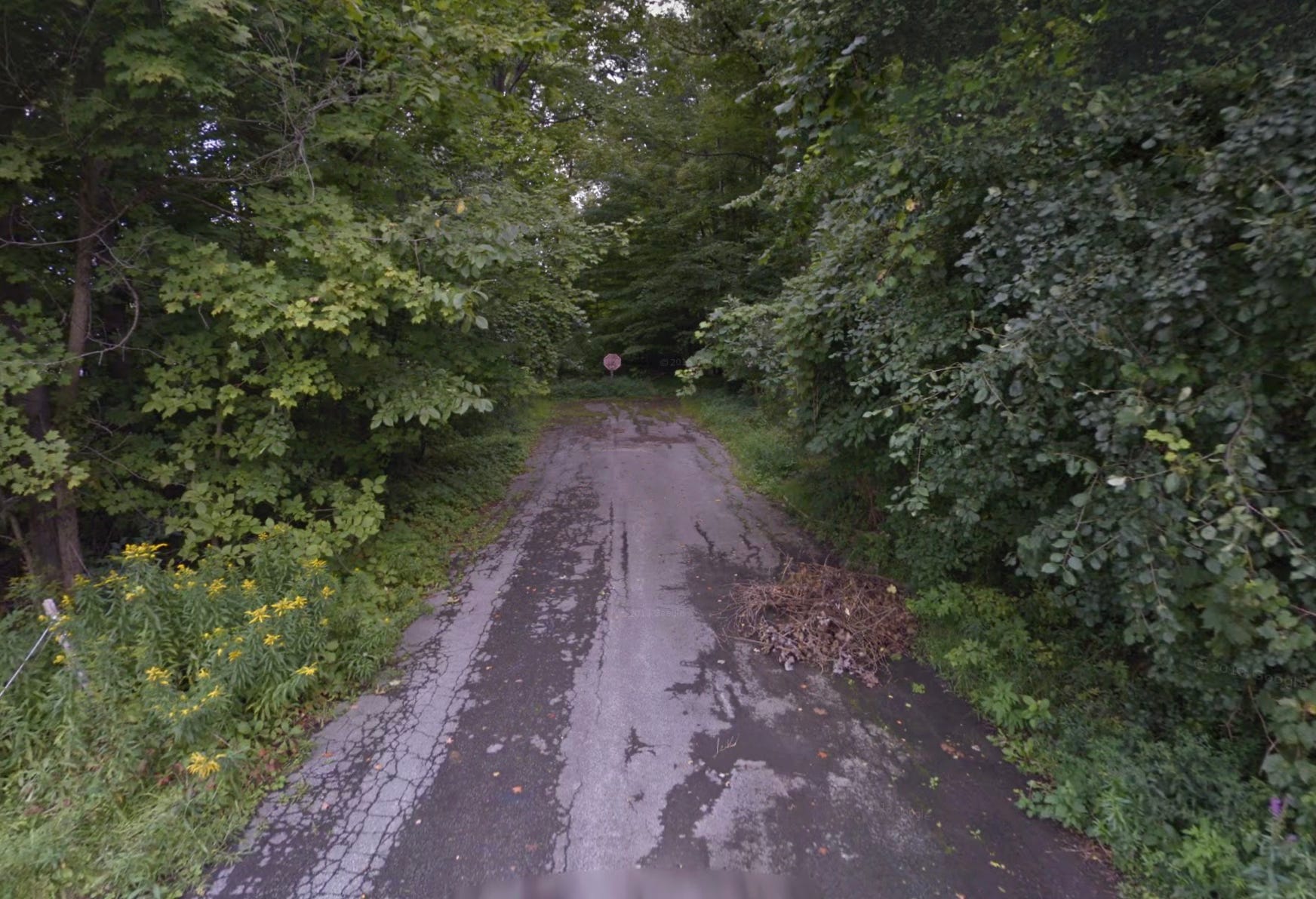
On Poe St. in East Utica,6 a dead-end road which looks like a dark pit in the dead of night, Brandon is standing outside of his car. He shakes. He pulls out his phone. He takes a photo of himself, showing his body below the lips, and posts it with the caption “Thanks to everyone who was good to me. I’ll miss you all.” He builds a fire. He presses play on the song “Test Drive” by Joji and verbalizes his internal monologue into a suicide note.
Waiting on a sacrificial life
Waiting on the ones who didn't fight
I told you not to waste my fucking time
I told you never sing that song, you lied.7
Brandon, under the display name “aperatia,” writes out her full name in the Discord channel, and pulls her form into the pile of dead leaves and grass next to his car. He lays on top of her after covering her body with a large green tarp, and watches the video he took of the moment she died. He posts another photo, this time with his bloodied hand hovering over her, saying “I’m sorry Bianca.”
Someone quickly brings attention to a channel moderator who was smart enough to look at the metadata of the file. The photo was taken that day, and the last message we see in the screenshot says “@aperatia, where did you get that photo?” Moderators and online friends quickly called authorities, but there was nothing that could be done about what was brewing on Instagram.
4chan users quickly spread the images posted by her murderer, flooding her profile’s tagged post tab. #RIPBianca quickly floats around to Twitter, and arguments about whether the girl who was an artist, a future college student, a sister, a daughter, and a friend was a revenge-deserving “femoid”8 drone into the comments section with no warning. There are these dichotomous gender boundaries that exist online, where women’s social “wrongdoings” such as having sex, masturbating, attempting drugs, etc. are stuck under a magnifying glass, angling the sun right onto their skin. Men laugh at women like they do burnt ants, smoke fizzling up from her skin as she melts into the concrete; her only crime was being human. The study of victimology’s excuse for victim blaming is that it’s embedded in the social construct. True, I guess, but again we run into the issue of satisfaction.
As the news of Bianca’s death spread further, a select few virtual imps work behind the scenes. Journalism is about the details, and a few producers of a low-budget documentary, as well as a YouTube video essayist, were sent the full extent of the court evidence. At seventeen years old, this included videos of Bianca that legally qualified as child pornography. After her passing, she wasn’t given a moment to breathe. The dignity of a story, of a victim to blame, was more important.
Despite the attempts to cleanse the net of such graphic depictions of a minor, there is some truth in the warning “the internet lasts forever.” And Instagram, despite the ongoing trend of moderating content on social media as demonstrated by Tumblr’s porn ban in 2018 and YouTube’s new creator policies concerning a children’s audience, was less than helpful with the task of erasing them.
On the morning of July 14th, 2019, thousands of teenage girls inevitably found themselves stumbling onto the page of @escty. Redirected from posts on their feed, an enormous response met Bianca’s defamation. Girls from all ends of the Earth posted photos of Bianca, kittens, pink clouds, cute memes, and other identifiers for mass feminine joy, attempting to overshadow the traumatic squares of gore appearing alongside Bianca’s name. With each post quickly spammed to combat the migratory incels, another photo of Bianca was sent to their mother, siblings, and friends. It took Instagram three days to freeze the ability to tag the account in other posts. Now, @escty exists as a memorial, a light grey labelng the page as “Remembering.” In her final post, just two days before her murder, she asks the crowd “how is everyone doing today?” She is permanently curious, kept alive in a comment section. Her tellonym link remains in her bio, collecting messages siphoned into a raging fit of anonymity.
In the aftermath, around a year later, Bianca’s family introduced “Bianca’s Law:” a proposed solution that requires social media companies to establish a proper moderation department, with steps to integrate them. As late as 2022, a version of the law was passed, criminalizing the spread of harmful imagery with malicious intent. If you were born in 2000, you spent twenty-two years in an internet where it was not a crime to casually post beheadings at noon on a Tuesday. But, with all these late-game moderation attempts, is it even any safer to be online? AI deepfakes, the tradwife movement, and sexual abuse pornography addictions rebranded as “gooning” makes it all feel hopeless.
This case is close to me because Bianca and I were mutuals on Instagram. Out of my small crowd of 45 followers, she was one of them. I watched her account turn into a battleground with my very eyes. And as the internet moves forward, overwriting media while feeding itself in circles, where is there room to bring justice into the conversation? Eventually, the virtual persona of Bianca will cease to exist, erasing a tragedy in favor of reducing app-wide account inactivity. At least, then, the space returns to her.
Notes:
“Alligator Blood,” Nicole Dollanganger, Natural Born Losers
https://www.vox.com/the-goods/2019/8/1/20748707/egirl-definition-what-is-an-eboy
Just wanted to mention that this is a screengrab from Google Street View and it made me sick to my stomach when I first looked at it.
“Test Drive,” Joji, BALLADS 1